Which Child Bike Carrier is Right for You? Types, Factors & Safety
Key Points
- After understanding the available types, choose a child bike carrier based on your specific needs and preferences.
- When selecting a child bike carrier, prioritize safety by considering factors like harness systems, adjustable footrests, and high back support.
- Ensure the child’s bike seat is age- and size-appropriate to guarantee your little one a secure and comfortable ride.
- Look for ASTM and EN certifications on child bike seats to ensure they meet safety standards and regulations.
- Based on your bike’s compatibility and preference for installation, choose between rear frame-mounted and rear rack-mounted child bike seats.
- When choosing a front—or rear-mounted child bike seat, consider factors like visibility, interaction with your child, and ease of installation.
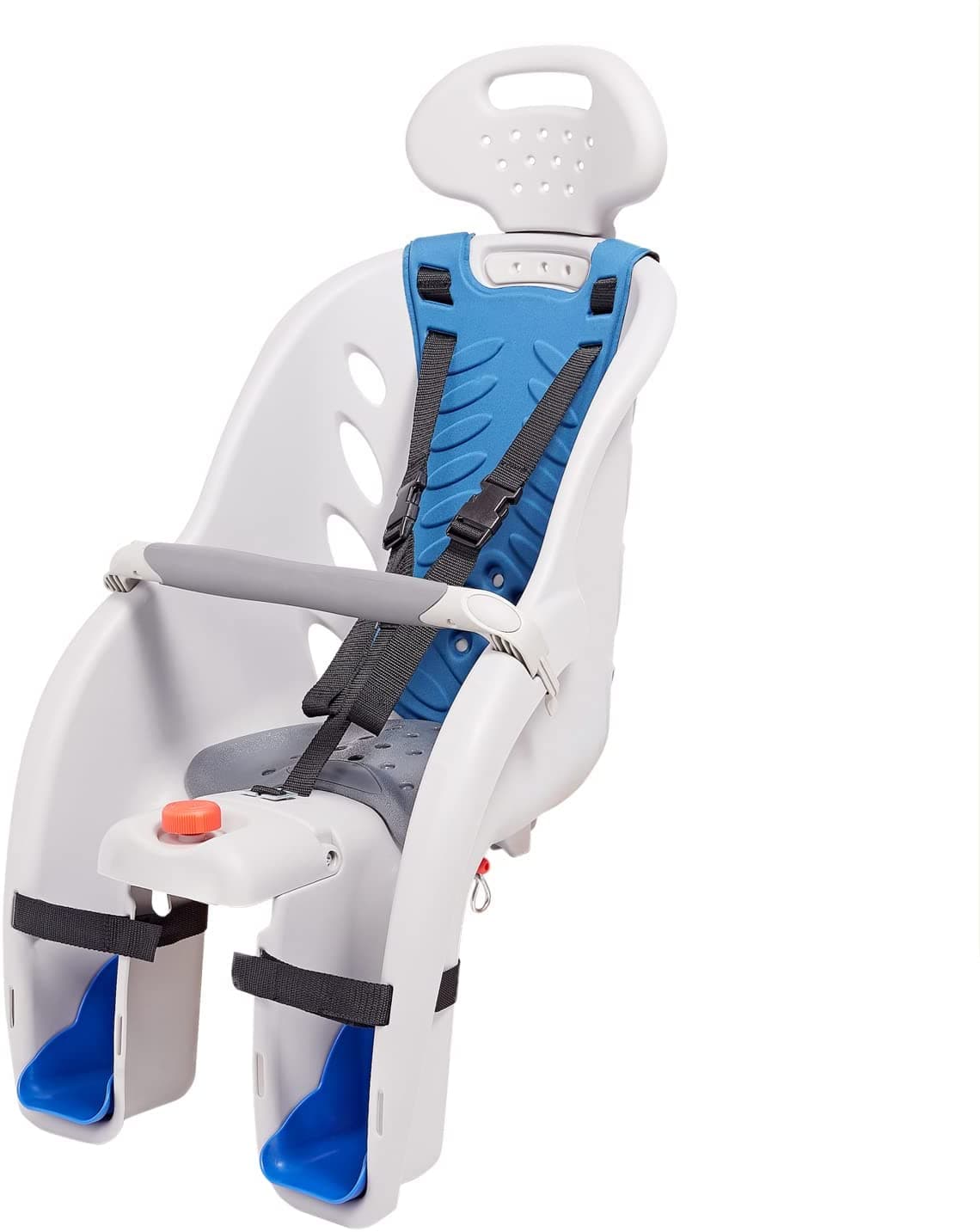
- SECURE AND COMFORTABLE RIDE: The Schwinn Deluxe Child Bike Carrier holds one child ages 1+ with a max weight of 40 lb and is perfect for family rides and weekend adventures.
- SAFETY FIRST: Quick release 3-point harness, a padded cross bar and leg restraints with safety straps keep your child securely fastened in the kid bike seat while riding.
- CUSTOM PADDING: Custom comfort padding supports your little ones back, and cushioned seat pads help ensure a comfortable ride. Adjustable footwells and removable headrest offer additional support.
- VERSATILE DESIGN: Quick-release system allows for easy removal of the seat, works with most adult bikes and offers 2-in-1 versatility, functioning as a rear rack carrier when the kids bike seat is removed.
- TRUSTED SCHWINN QUALITY: Schwinn is the original American bike brand. We’ve spent over 130 years building the bicycle industry into what it is today, and we’re not done yet. Each product is designed in Madison, WI.

Last update on 2026-10-02 / Affiliate links / Images from Amazon Product Advertising API
Choosing the right bike child carrier with shoulder straps can be a game-changer for your family adventures.
With various options available, from front-mounted seats to rear racks, finding the perfect fit is crucial. While some prioritize comfort and safety features, others lean towards lightweight and easy-to-install models.
The contrast between budget-friendly and premium selections adds another layer of decision-making complexity.
Understanding your needs and preferences will help you select the ideal bike child carrier for your lifestyle and budget.
Types of child bike carriers available
Front-Mounted
Front-mounted child bike seats are attached to the front of the bike, allowing you to keep an eye on your little one while riding.
These carriers typically have a maximum weight limit of pounds and come with shoulder straps for added safety.
Some popular brands offering front-mounted child carriers include Thule and WeeRide.
Front-Mounted Child Bike Seats:
- Keep your child in sight during rides
- Have a weight limit and shoulder straps for safety
Rear-Mounted
Rear-mounted child bike seats are installed at the back of the bicycle, providing a secure spot for your child.
They usually have adjustable footrests, harness systems, and mounted seats to ensure your child’s comfort and safety during the ride.
Brands like Hamax and Topeak offer reliable rear-mounted child carriers.
Rear-Mounted Child Bike Seats:
- Installed at the back of the bike for security
- Equipped with adjustable footrests and harness systems
Trailer Bikes or Tag-Alongs
Trailer bikes, or tag-along, are separate units attached to an adult bike through a tow bar. These mounted seats allow older children who have outgrown traditional bike trailers but are not ready to ride independently yet to join their parents on biking adventures.
Popular brands like Burley offer sturdy trailer bikes that provide children an interactive riding experience.

- Smart and functional rear-mounted child bike seat designed for everyday rides
- Easily mount the child bike seat to the frame of your bike
- Soft and shock-absorbing seat for child comfort
- Adjustable 5-point harness ensures child safety and the perfect fit
- Childproof safety buckle to quickly and easily secure child
Last update on 2026-10-02 / Affiliate links / Images from Amazon Product Advertising API
Factors to consider when choosing a child bike carrier
Child’s Age and Weight Limit
When selecting a child bike carrier, it is crucial to consider your child’s age, weight limit, and frame mount.
Different carriers have varying restrictions based on these factors.
For instance, some carriers are designed for infants weighing up to 20 pounds, while others can accommodate older children up to 40 pounds.
Ensure that your chosen carrier aligns with your child’s age and weight requirements for safety and comfort.
Child Bike Carrier Age & Weight Considerations:
- Check manufacturer guidelines
- Consider the growth spurts of the child
- Look for adjustable features in carriers
Compatibility with Your Bike
Another essential factor is the carrier’s compatibility with your bike’s frame mount.
Not all carriers fit every type of bicycle, so it’s important to check if the carrier you’re interested in is compatible with your specific bike model.
Some carriers may require additional accessories or adapters for proper installation.
Factors affecting compatibility:
- Frame size and design of the bike
- Mounting points required by the carrier
- Check if any modifications are needed for installation
Ease of Installation and Removal
The ease of installing and removing a child bike carrier can significantly impact your overall experience using it.
Opting for a carrier that offers straightforward installation procedures can save you time and frustration when setting it up or taking it off your bike.
Look for carriers with quick-release mechanisms or user-friendly attachment systems.
Installation & Removal Convenience Tips:
- Practice installing/removing before actual use.
- Read user manuals thoroughly.
- Seek expert advice if unsure about installation steps.
Safety considerations for baby and child bike seats
Adjustable Harness System
An adjustable harness system is crucial when selecting a child bike carrier.
This feature ensures a secure fit for your little one, minimizing the risk of them slipping or moving around during the ride.
Look for carriers with easy-to-adjust straps to accommodate your child’s growth.
A well-fitted harness keeps your child safe and comfortable throughout the journey.
When choosing a carrier, opt for models that provide ample impact-absorbing padding.
This additional layer of protection can make a significant difference in case of any bumps or falls during the ride.
The padding helps reduce impact forces on your child’s body, offering extra safety and security while cycling together.
Reflective Materials
Consider carriers that incorporate reflective materials into their design to enhance visibility both day and night.
These materials improve visibility to other road users, making you and your child more noticeable while riding in various lighting conditions.
Reflective elements can help prevent accidents by ensuring that drivers, pedestrians, and cyclists can see you clearly on the road.
Age and size considerations for child bike seats
Minimum Age and Weight Requirements
Child bike seats typically have minimum age and weight requirements to ensure the child’s safety.
These requirements vary depending on the brand and model of the seat.
For example, some seats may require a minimum age of one year old, while others might require the child to be able to support their head independently.
Weight restrictions are also crucial. Most seats accommodate children up to a certain weight limit, usually around 40 lbs.
Child bike carriers come with age range specifications that parents must adhere to for their little one’s safety.
Manufacturers set these limits based on height settings and weight capacity guidelines.
Parents need to check these specifications before purchasing a child bike carrier.
Maximum Weight Capacity of the Seat
Its maximum weight capacity is another critical factor when choosing a child bike carrier.
Ensuring your child does not exceed this limit is crucial for their safety and comfort during rides.
Exceeding the maximum weight capacity can compromise the seat’s stability and structural integrity, posing risks to your child’s well-being.
When selecting a child bike carrier, ensure it has enough room for your little one as it grows over time.
Adjustable features such as height settings are beneficial as they allow you to customize the fit according to your child’s needs at different ages.
- Pros:
- Ensures safety by adhering to manufacturer guidelines
- Provides comfortable rides for children within specified weight limits
- Cons:
- Limited usability if your child exceeds weight restrictions
- You may need frequent adjustments as your child grows.

- SECURE 5-POINT HARNESS SYSTEM — Keep your child safely buckled in with an adjustable five-point harness designed for children ages 1 and up, weighing up to 40 lbs, providing the same harness configuration trusted by premium carriers costing three times more.
- SIMPLE RACK-MOUNT INSTALLATION — Designed to fit most standard 26-inch and 27-inch adult bikes without rear suspension; the wrap-around bucket seat attaches securely to your existing rear rack with included hardware and step-by-step instructions.
- BUILT-IN SAFETY FEATURES — Molded spoke guard prevents small feet from contacting wheel spokes, while the included rear reflector enhances visibility during rides; wrap-around bucket design provides side-impact protection for added peace of mind.
- PREMIUM FEATURES AT AN AFFORDABLE PRICE — Get the essential safety features parents need—five-point harness, spoke guard, reflector, and sturdy bucket seat—at a fraction of the cost of competitors priced at $180 or more.
- COMPATIBLE WITH MOST ADULT BIKES — Fits standard 26-inch and 27-inch bicycles without rear suspension; check your bike’s rear rack compatibility before purchase to ensure a secure fit for your family’s riding adventures.
Last update on 2026-10-02 / Affiliate links / Images from Amazon Product Advertising API
Understanding ASTM and EN certification for child bike seats
Understanding ASTM and EN Certification
Child bike seats must meet safety standards to ensure your child’s protection. In the US, the ASTM standards guarantee that the carrier complies with strict safety and quality requirements.
On the other hand, an EN certification signifies adherence to European safety regulations.
When choosing a bike child carrier, considering these certifications is crucial for ensuring your child’s safety during rides.
The ASTM certification ensures that the seat meets specific criteria set by experts in the United States.
Similarly, an EN certification indicates the carrier has passed rigorous testing based on European safety standards.
Benefits of ASTM and EN Certifications
- Safety Assurance: Both certifications prioritize your child’s well-being by ensuring that carriers meet stringent safety guidelines.
- Quality Standards: With these certifications, you can trust that the bike seat is built to high-quality specifications.
- Global Recognition: The EN certification makes traveling or using your carrier in Europe easier, as it aligns with their safety regulations.
Rear frame-mounted vs. rear rack-mounted child bike seats
Stability and Direct Connection
Rear frame-mounted seats offer stability by directly connecting to the bike frame.
This design ensures a secure attachment, minimizing any wobbling or shifting during rides.
The connection to the frame provides a sturdy base for the seat, enhancing safety for your child as you cycle.
When considering a rear frame-mount child bike seat, consider how it directly attaches to your bicycle’s seat tube or headset.
This direct connection offers peace of mind, knowing that your child is securely fastened to the bike’s core structure.
Versatility and Easy Installation/Removal
On the other hand, rear rack-mounted seats provide versatility in compatibility with different bikes.
These seats attach to a rear rack installed on or behind the back wheel.
Their installation and removal are relatively straightforward, making them convenient for families with multiple bikes or those who frequently switch between using a carrier and riding solo.
If you opt for a rear rack-mounted child bike seat, consider its easy installation/removal from one bicycle to another quickly.
These carriers often come with quick-release mechanisms allowing you to attach/detach them without hassle.
Front vs. rear-mounted kids bike seat comparison
Interaction with Child
Front-mounted seats provide excellent interaction opportunities during the ride. You can easily talk to your child, point out interesting things, and ensure their safety.
Interacting with your child while riding can make the journey more enjoyable for both of you.
Imagine seeing their reactions up close as you explore new places on your bikes.
Weight Distribution
On the other hand, rear-mounted seats offer a more balanced weight distribution on the bike.
This positioning helps keep the center of gravity closer to the rider, enhancing stability and control.
Having your child seated at the back ensures less impact on maneuvering and balancing your bike. It distributes weight evenly across both wheels, making it easier to handle different terrains.
Exploring different mounting styles for child bike seats
Clamp-on Mounting Systems
Clamp-on mounting systems are perfect if you need a quick attachment and detachment option for your child’s bike seat.
These systems provide convenience, allowing you to easily remove or switch the seat between bikes when not in use.
For example, the Thule RideAlong Mini features a clamp-on mounting system that securely attaches to the bike’s handlebar stem.
- Pros:
- Easy to install and remove
- Versatile for use on multiple bikes
- Convenient for short rides or occasional use
- Cons:
- It may not be as sturdy as bolt-on systems.
- Limited weight capacity compared to permanent installations
Bolt-On Mounting Systems
On the other hand, bolt-on mounting systems offer a more permanent installation solution for child bike seats.
These systems provide a secure and stable attachment by bolting directly onto the bicycle’s frame. The Hamax Caress Child Bike Seat utilizes a bolt-on mounting system that ensures maximum safety and stability during rides.
- Pros:
- Provides enhanced safety and stability
- Suitable for long rides or regular use
- Can support higher weight capacities than clamp-on systems
- Cons:
- Installation may require tools and expertise
- Not easily transferable between different bikes
When choosing between clamp-on and bolt-on mounting systems, consider factors such as how frequently you plan to use the child bike seat, ease of installation, desired level of security, and whether you need versatility across multiple bicycles.

- Easy, fast and secure installation
- Ventilated for child’s comfort
- 3-Point harness system
- Foam seat pad
- Adjustable foot beds grow with your child
Last update on 2026-10-02 / Affiliate links / Images from Amazon Product Advertising API
Tips for biking with young children safely and comfortably
Getting your child accustomed
Start with short rides to get your child used to the bike seat. It’s essential for them to feel comfortable and secure before more extended journeys.
Utilize additional safety gear like helmets, which protect their little heads.
Choose routes wisely with dedicated bike lanes or low traffic volume. This ensures a safer environment for you and your child while riding together.
By selecting suitable trails, you can minimize risks and focus on enjoying the ride.
Ensuring safety measures
When biking with young children, it’s vital to use appropriate safety equipment such as helmets and reflective clothing.
These items enhance visibility on the road, making it easier for other cyclists or drivers to spot you. Use foot straps or harnesses to secure your child during the ride.
When riding with little ones onboard, it’s crucial to opt for bikes equipped with reliable brakes. Ensure that the bike is well-maintained and has efficient braking systems.
This adds an extra layer of protection in case of any unexpected stops or emergencies.
Bike Child Carrier Closing Thoughts
So, which bike child carrier is right for you?
After diving into the types, factors, safety considerations, and mounting styles of child bike seats, it’s clear that safety should be your top priority.
Remember, when cruising down the bike path together, your little one’s well-being is non-negotiable.
Consider their age, size, and the certifications of the carrier to ensure a secure ride every time.
Whether you opt for a rear frame-mounted seat or a front-mounted one, ensure it meets all safety standards.
So, gear up, strap in your kiddo securely, and enjoy those unforgettable rides together!
Bike Child Carrier Frequently Asked Questions
What are the different types of child bike carriers available?
There are various types of child bike carriers, such as rear frame-mounted seats, rear rack-mounted seats, front-mounted seats, and trailers. Each type has its features and benefits tailored to different preferences and needs.
How do I choose the right child bike carrier with foot straps?
Consider factors like your child’s age and size, the carrier’s safety features, mounting styles (rear vs. front), ASTM/EN certifications, and your biking habits. Choose a carrier that meets safety standards while providing comfort for you and your child.
Are there specific safety considerations when using baby or child bike seats with shoulder straps?
Yes, ensure proper helmet fit for your child, secure harness systems on the seat, follow weight limits specified by manufacturers, regularly check for wear or damage on the carrier components, and use reflective gear for visibility during rides in low-light conditions.
What age group is suitable for using a child bike seat?
Child bike seats are typically designed for children between 1 and 6 years old, depending on the individual weight capacities specified by manufacturers.
It’s crucial to adhere to these guidelines to ensure maximum safety and comfort while riding with your little one.
How can I ensure safe and comfortable biking with young children and bike trailers?
Follow recommended guidelines such as always wearing helmets and ensuring your child wears theirs properly fitted, too.
Adjust the seat securely according to manufacturer instructions before each ride; maintain regular checks on equipment condition; communicate clearly with your passenger about expected behavior during rides.